

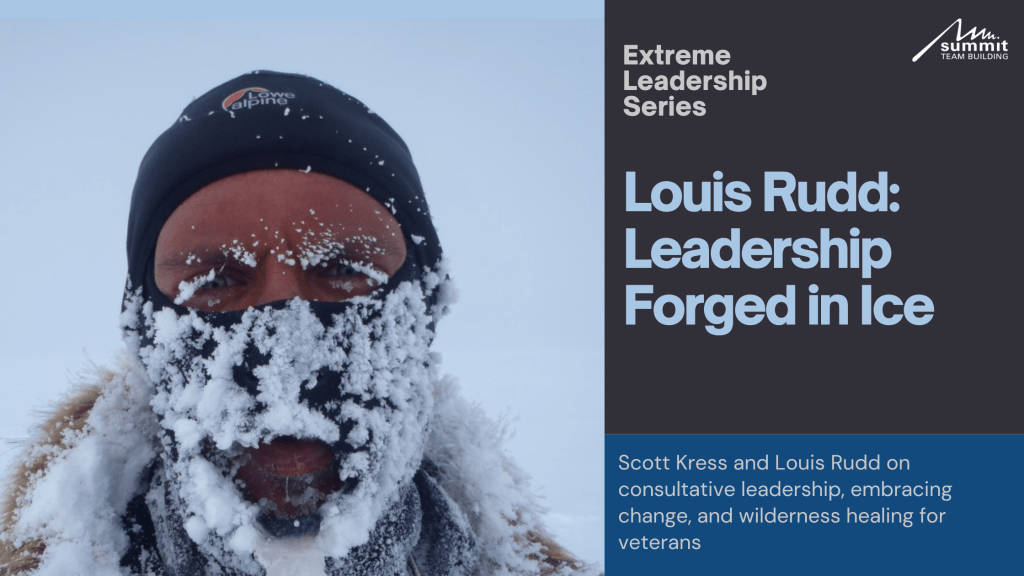
Exploring Leadership Through the Lens of Adventure: Lessons from Louis Rudd
Louis Rudd is a remarkable figure in the history of exploration, one of the few who have truly lived an adventure-filled life. As a British polar explorer and former soldier, he has completed multiple expeditions in some of the harshest environments on Earth. In 2018, Rudd became the first Briton to complete a solo, unsupported, and unassisted crossing of Antarctica. More than just an accomplished explorer, he is a modern-day adventurer and a true pioneer in leadership within extreme environments. This podcast dives into Louis Rudd’s incredible journey and the lessons he has learned along the way. It’s about leadership defined by experience in some of the most challenging conditions on the planet.
Watch the Interview
The Journey Begins: A Foundation in Adventure
Growing up in Hereford, England, Louis Rudd was captivated by tales of polar exploration from a young age. Inspired by legends like Captain Scott and Ernest Shackleton, he developed a deep-seated desire to experience the world’s most extreme environments firsthand. At the age of 16, he joined the British Army, seeking adventure and an opportunity to test his limits. His military career laid the foundation for his future explorations, instilling in him discipline, resilience, and leadership skills that would prove invaluable in the polar regions.
Military Training: The Crucible of Leadership
Rudd’s time in the British Army, including service with the Parachute Regiment and as an instructor at the Army Foundation College, was instrumental in shaping his leadership style. The military provided a structured environment where discipline, toughness, and performance under pressure were paramount. Each mission was an exercise in leadership development, honing his ability to make critical decisions and lead teams in challenging situations.
Transitioning from military operations to polar expeditions, Rudd applied the principles he had learned about teamwork and leadership. He understood that success in extreme environments depended on meticulous preparation, cohesive teamwork, and the ability to adapt to rapidly changing circumstances.
Leadership in Extreme Environments
Rudd’s approach to leadership is firmly rooted in the hard lessons gained from operating in some of the most inhospitable places on Earth. “I’ve led teams in Antarctica,” Rudd says, “and you have to lead a team you don’t know very well, but you’re going to expect a hell of a lot out of them.” In such extreme environments, where conditions can change in an instant, clear communication and setting expectations are crucial.
Before setting out on an expedition, Rudd ensures that every team member understands the potential challenges ahead. He emphasizes the importance of being prepared for the unexpected, which helps to alleviate anxiety and build confidence within the team. By mentally preparing his team to anticipate and adapt to unforeseen obstacles, Rudd fosters a resilient and proactive mindset.
Consultative Leadership: Empowering the Team
Creating a culture of inclusivity, where every team member feels valued and heard, is central to Rudd’s leadership philosophy. In 2016, he organized an expedition where a small team of young soldiers traversed 1,100 miles across Antarctica. As the most experienced member, Rudd made a point of consulting his team when making decisions.
By involving the team in problem-solving discussions, he provided them with a sense of ownership and harnessed their diverse experiences and perspectives. This collaborative approach not only led to better decision-making but also strengthened the team’s cohesion and morale. “It made for a better expedition,” Rudd reflects.
Lessons from Shackleton: Leadership Under Duress
Rudd draws inspiration from historical figures like Ernest Shackleton, who exemplified exceptional leadership under duress during the ill-fated Endurance expedition. Despite being trapped in ice for months, Shackleton managed to keep his crew alive, motivated, and focused on survival. Rudd is impressed with how Shackleton maintained his team’s morale and unity against impossible odds.
He also reflects on the lessons from Robert Falcon Scott’s tragic race to the South Pole, emphasizing the importance of adaptability and the willingness to pivot when circumstances change. For Rudd, these historical examples reinforce the critical role of leadership in determining the success or failure of an expedition.
The Therapeutic Value of Wilderness
Beyond the physical challenges, Rudd believes that engaging with nature offers significant mental and emotional benefits. He has witnessed firsthand how the wilderness can serve as a therapeutic environment, especially for veterans transitioning from military to civilian life. His expeditions often incorporate elements of personal growth, providing participants with the opportunity to reconnect with themselves amidst the vastness of nature.
Through his work with organizations that promote adventure and exploration, Rudd is committed to making the wilderness accessible to those who might not otherwise have the opportunity. “When you are in the Arctic or the Antarctic, the extremes take you out of yourself,” he explains. “At the same time, it can bring people together. The challenges break you down, and when they are over, sometimes you feel enormous and sometimes you feel humble, but either way, it helps you to grow.”
Conclusion: The Legacy of Leadership
Louis Rudd’s life is a testament to the power of perseverance, teamwork, and effective leadership. From a young boy inspired by tales of polar explorers to a seasoned adventurer leading teams across the most extreme environments on Earth, his journey underscores the importance of adaptability, preparation, and empathy.
Rudd continues to push the boundaries of exploration while inspiring others through his experiences. He remains a leader by example—empowering, empathetic, and resilient—recognizing that the most important elements of leadership are community and compassion. His story illustrates that true leadership is not just about guiding others through challenges but also about fostering growth and unity within the team.
Interested in Creating Your Own Extreme Leadership Team?
Scott offers a series of Keynote presentations and workshops on team building. Here’s a quick video of Scott in action! Contact us to explore this further.
About The Extreme Leadership Series
The Extreme Leadership Series is a dynamic exploration of leadership through the lens of extraordinary situations. Hosted by Scott Kress, it features a mix of engaging podcasts and insightful written interviews with leaders who have thrived in some of the world’s most demanding environments. From the icy wilderness of polar regions to the towering summits of the highest mountains, guests share their stories of resilience, teamwork, and courage.
This series goes beyond mere adventure tales; it delves into the core principles of effective leadership such as preparation, adaptability, and the ability to cultivate high-performance teams. It offers valuable lessons for leaders in any field, aiming to educate, inspire, and equip listeners and readers with the tools to lead under pressure.
Whether you’re an emerging leader seeking motivation, an experienced executive aiming to enhance your skills, or simply intrigued by the intersection of leadership and extreme challenges, the Extreme Leadership Series provides a unique perspective on navigating adversity and achieving success. Join Scott Kress on this journey to uncover what it takes to lead in the most unforgiving circumstances, where every decision can make a difference.