

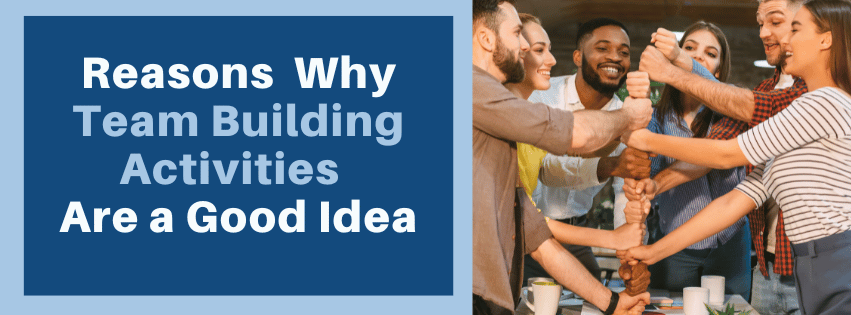
Team building activities are important for companies because they can help improve communication, foster a sense of community, and enhance collaboration among team members. These activities can have numerous benefits for both employees and the company’s bottom line.
Why are team building activities important for a company and what benefits do they deliver to employees and the company’s bottom line?
Here are some specific benefits:
Improved Communication: they can help break down communication barriers and improve communication among team members. This can lead to more effective collaboration, better problem-solving, and higher productivity.
Increased Trust: they can help build trust among team members. When employees trust each other, they are more likely to collaborate and work effectively together.
Enhanced Collaboration: can help employees learn how to work together more effectively. By working together on fun and engaging activities, employees can develop a better understanding of each other’s strengths and weaknesses, which can lead to more effective collaboration in the workplace.
Boosted Morale: they can help boost morale and improve job satisfaction. Employees who feel connected to their team and have a positive attitude towards their job are more likely to be engaged and productive.
Increased Creativity: they can help stimulate creativity and innovative thinking. When employees are put in new and challenging situations, they are forced to think outside the box and come up with creative solutions.
Improved Retention: employees who feel connected to their team and have a positive attitude towards their job are more likely to stay with the company long-term. They can help improve employee retention rates and reduce turnover.
Overall, team building activities can deliver numerous benefits to both employees and the company’s bottom line. By improving communication, building trust, enhancing collaboration, boosting morale, increasing creativity, and improving retention rates, companies create a more productive, engaged, and successful workforce.
How does a company measure the impact?
Measuring the impact of team building activities can be challenging, but there are several ways that a company can assess the effectiveness of these activities.
Employee Feedback: one of the simplest and most effective ways to measure the impact of is to ask employees for feedback. Companies can use surveys, focus groups, or individual interviews to gather feedback from employees about their experience. This feedback can provide valuable insights into how employees perceived the activities, what they learned, and how they felt about their team and their job.
Performance Metrics: companies can also measure the impact of by tracking performance metrics such as productivity, efficiency, and quality. If these metrics improve after a team building activity, it can be a good indication that there was a positive impact on the team.
Employee Engagement: employee engagement is a key indicator of the effectiveness of team building activities. Companies can measure employee engagement through surveys or other tools that assess employee satisfaction, motivation, and commitment to the organization. If employees are more engaged after, it can be a sign that the activity was effective.
Team Dynamics: companies can also measure impact of by observing team dynamics in the workplace. Are team members communicating more effectively? Are they collaborating more seamlessly? Are they more supportive of each other?
Follow-Up Activities: finally, companies can measure the impact by conducting follow-up activities or initiatives. If employees are applying the lessons learned from the team building activities in their day-to-day work, that’s a good sign.
Overall, measuring the impact of team building activities requires a combination of quantitative and qualitative measures. By gathering feedback from employees, tracking performance metrics, assessing employee engagement, observing team dynamics, and conducting follow-up activities, companies can gain a better understanding of the effectiveness of their team building efforts.
What’s the value of hiring a professional team to implement them with you?
Hiring a professional team building company like Summit Team Building can provide significant value to a company’s team building efforts. Here are some reasons why:
Expertise: professional team building companies have the expertise and experience to design and implement effective an effective team building program. They have a deep understanding of what works and what doesn’t when it comes to team building, and can provide customized solutions to meet a company’s specific needs.
Variety: a professional team offers a wide range of experience, activities and programs, from outdoor adventures to indoor workshops. This means that companies can choose the activities that best fit their team’s needs and preferences.
Efficiency: planning and implementing team building activities can be time-consuming and challenging. By hiring a professional team building company, companies can save time and effort and focus on their core business activities.
Safety: Professional team building companies prioritize safety and risk management. They have the equipment, training, and expertise to ensure that all team building activities are conducted safely and responsibly.
Measurable Results: Professional team building companies can provide measurable results and feedback on the effectiveness of their team building activities. This can help companies make informed decisions about future team building efforts and measure the return on their investment.
Overall, hiring a professional team building company like Summit Team Building can provide a company with the expertise, variety, efficiency, safety, and measurable results they need to create a more productive, engaged, and successful workforce. Contact Us to start the conversation!